
Protection for sound asphalt
Sealcoating in Loveland, CO
High-altitude sun dries asphalt out quickly. A clean, filled and sealed surface holds up much longer.
- Free on-site estimates
- Itemized written quote before work starts
- Subgrade checked for clay and soft spots first
Slowing Down Sun and Water
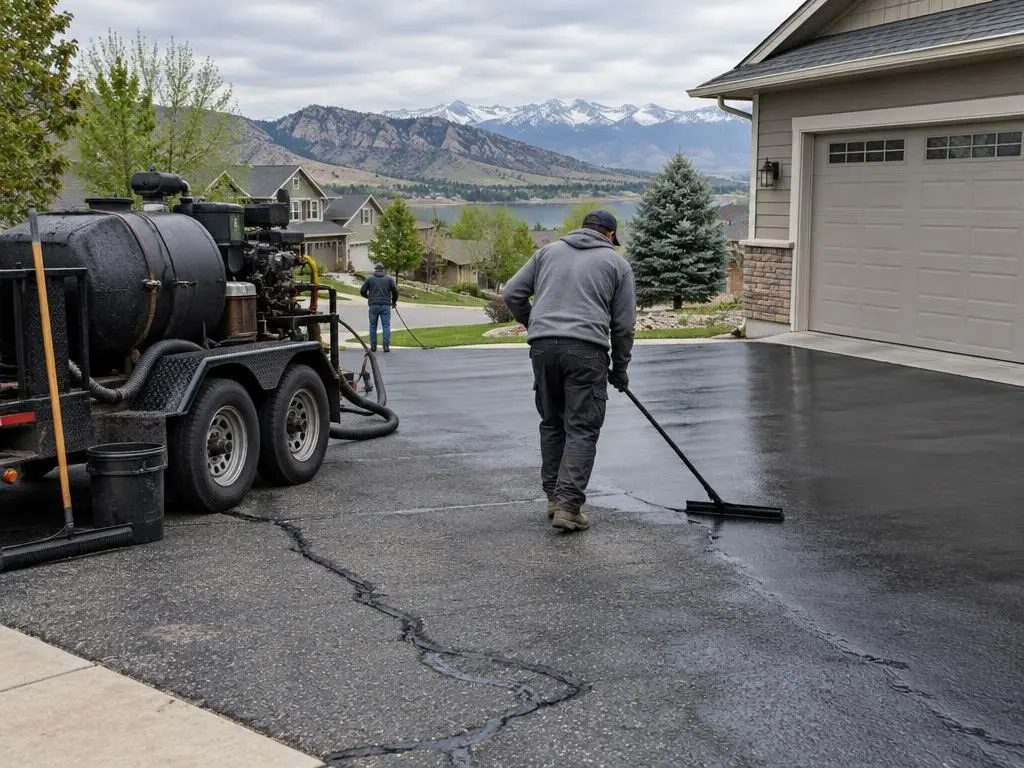
Sealcoating covers asphalt with a thin layer of liquid sealer that protects the binder holding the stone together. At Loveland's elevation, near 5,000 feet, strong sun oxidizes that binder and turns the surface gray, then small stones begin to loosen and water finds a way in. A good seal job slows that down. It does not add strength or fix a failed base, so it belongs on pavement that is still in good shape.
Crack sealing comes first
Sealer is too thin to fill a crack. If cracks are not cleaned and filled before sealing, the sealer sinks in and the crack is back in weeks. We blow out cracks and fill them with hot-applied rubberized sealant, which stays flexible through cold nights. HomeGuide lists crack filling at roughly $0.50 to $3 per linear foot. Doing it before November keeps water out of the cracks during the freeze-thaw months.
When to seal
HomeGuide advises waiting 3 to 6 months after new asphalt is laid, so the surface oils can cure, and then resealing every 2 to 10 years depending on the product and climate. The easiest sign is color. When the surface has faded to gray and the stones show, it is time. Sealing too often builds up a thick layer that cracks and peels.
Weather
Sealer needs dry pavement, no rain for a day and temperatures in roughly the 50 to 95 degree range, per HomeGuide. Most products need 12 to 72 hours before cars can drive on them. Along the Front Range, that usually means late spring through early fall, and we keep an eye on afternoon thunderstorms in summer.
Preparation
- Blowing and sweeping the surface, including the edges
- Scraping and priming oil and fuel stains so the sealer bonds
- Cleaning and filling cracks
- Cutting in by hand along garage slabs, walks and curbs
- Blocking off the area until it cures
Skipping prep is the main reason seal jobs peel.
Sealer types
HomeGuide lists asphalt polymer emulsions, coal tar emulsions, latex acrylic and oil-based products. Coal tar resists fuel stains but has been restricted in some places over health and environmental concerns; asphalt emulsions are considered gentler but stain more easily. We tell you which product we plan to use and why.
Lots
On parking lots, we seal one section at a time so part of the lot stays open, and restripe once the sealer cures. HomeAdvisor lists commercial sealcoating at $0.15 to $0.30 per square foot.
Driveway etiquette after sealing
Keep sprinklers off the surface for a day, and keep cars, bikes and pets off until we say it has cured. Turning the wheel while parked on fresh sealer leaves scuff marks, so pull straight in for the first week.
What This Covers
A seal job in order: clean, repair, coat.
Surface cleaning
Blowing, sweeping and edging so sealer bonds to asphalt.
Hot crack sealing
Cracks routed or blown clean and filled with rubberized sealant.
Oil-spot priming
Stains scraped and primed so the sealer does not lift.
Sealer application
Applied by squeegee or spray, with edges cut in by hand.
Lot restriping
Lines repainted once the sealer has cured.
Typical Sealcoating Costs
| Item | Published range |
|---|---|
| Driveway sealing, installed (HomeGuide) | $1 to $2 per sq ft |
| Two-car driveway, 20 x 20 ft (HomeGuide) | $400 to $800 |
| Three-car driveway, 24 x 36 ft (HomeGuide) | $860 to $1,700 |
| Crack filling (HomeGuide) | $0.50 to $3 per linear ft |
| Parking lot sealcoating (HomeAdvisor) | $0.15 to $0.30 per sq ft |
National ranges from published cost guides, listed in each row. Northern Colorado pricing can differ, and the figure on your written estimate is the price.
How It Works
1. Check
We confirm the asphalt is sound enough to seal.
2. Clean and fill
Surface cleaned, stains primed, cracks filled.
3. Seal
Sealer applied in suitable weather with hand-cut edges.
4. Cure
Area blocked off until ready, usually 12 to 72 hours.
Sealcoating Questions
How often should I sealcoat in Colorado?
HomeGuide gives a range of 2 to 10 years depending on product and climate. In practice, reseal when the surface has faded and stones show. Strong sun at altitude tends to push that toward the shorter end.
How soon can I seal a new driveway?
Wait 3 to 6 months after paving so the asphalt can cure. Sealing too early traps oils that need to evaporate.
Does sealcoating fix cracks?
No. Cracks need to be cleaned and filled first. Sealer then covers the surface, including the filled cracks.
How long do I stay off it?
Foot traffic is usually fine after a few hours. Cars wait 12 to 72 hours depending on temperature and shade. We tell you when it is ready.
Sealcoating Service Areas
- Asphalt Paving in Loveland, CO
- Asphalt Paving in Fort Collins, CO
- Asphalt Paving in Berthoud, CO
- Asphalt Paving in Johnstown, CO
- Asphalt Paving in Windsor, CO
- Asphalt Paving in Milliken, CO
- Asphalt Paving in Wellington, CO
- Asphalt Paving in Timnath, CO
- Asphalt Paving in Greeley, CO
- Asphalt Paving in Longmont, CO
- Asphalt Paving in Estes Park, CO
- Asphalt Paving in Evans, CO
- Asphalt Paving in Severance, CO
- Asphalt Paving in Mead, CO
- Asphalt Paving in Eaton, CO
- Asphalt Paving in Firestone, CO
- Asphalt Paving in Frederick, CO
- Asphalt Paving in Laporte, CO
- Asphalt Paving in Ault, CO
- Asphalt Paving in Platteville, CO
Get a Sealcoating Estimate
Free sealcoating estimates in Loveland and across Northern Colorado.